
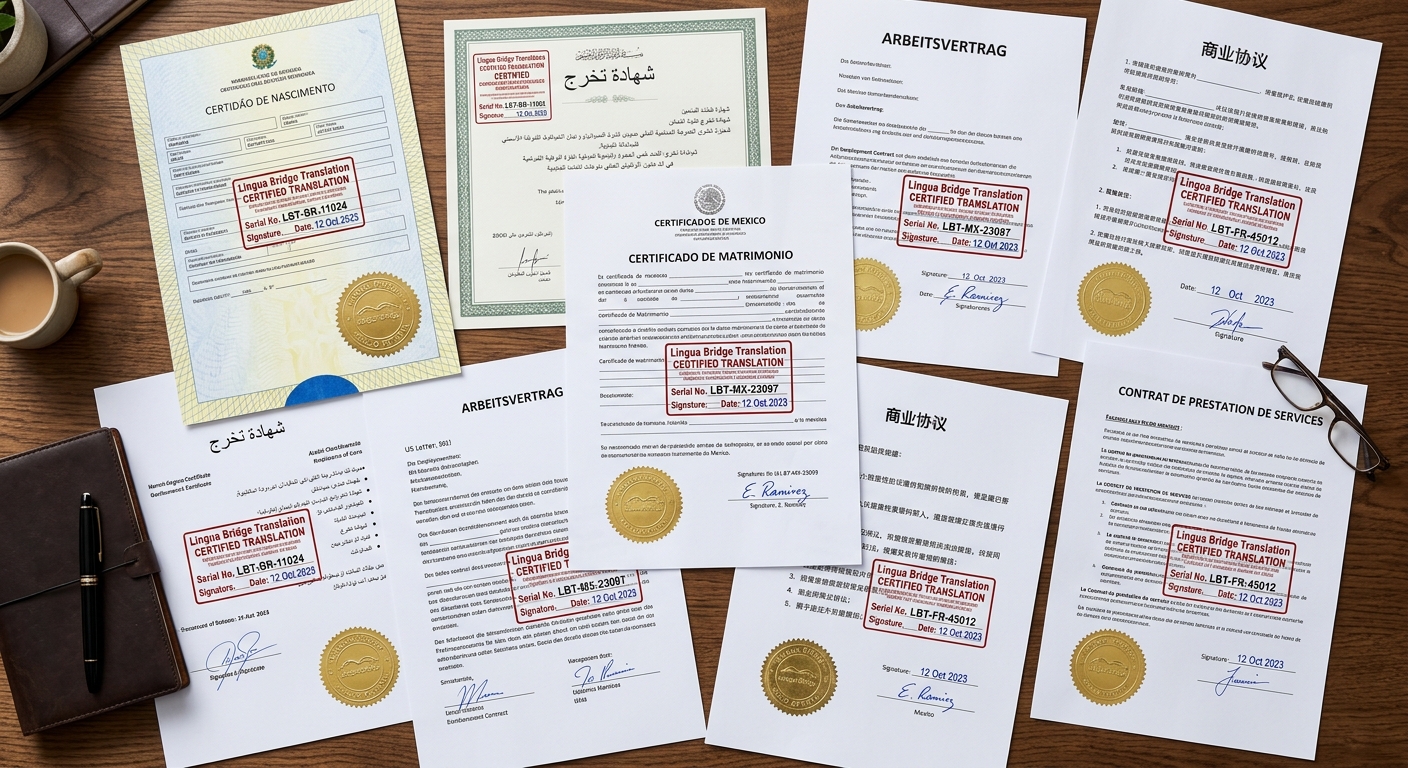
USCIS Certified Translation Requirements, Explained
By Lingua Bridge Translation · 8/4/2026
If you are filing with U.S. Citizenship and Immigration Services, any document that is not in English must be accompanied by a certified English translation. It is one of the most common places an otherwise strong petition slows down - not because the translation is wrong, but because it is not certified the way USCIS expects.
What “certified” means to USCIS
USCIS does not require a government-licensed or sworn translator. Instead, it requires that the translation be complete and accurate, and that the translator certify - in a signed statement - that they are competent to translate the document and that the translation is true to the original. That signed statement, often called a Certificate of Translation Accuracy, is what turns an ordinary translation into a certified one.
Which documents usually need one
Birth certificates, marriage and divorce certificates, academic transcripts and diplomas, police records, and bank or court documents are the records we certify most often. If it is a foreign-language document supporting an immigration benefit, assume it needs a certified translation.
How to avoid a Request for Evidence
Three details cause most translation-related delays: names that do not match across documents, dates rendered in the wrong format, and an incomplete translation that skips seals, stamps, or marginal notes. A good certified translation reproduces the full document - including the parts that are easy to overlook - and keeps names and dates consistent with the rest of your filing. At Lingua Bridge, every certified translation is prepared by a specialist, checked by a second linguist, and issued with a compliant certificate so reviewers never have to guess.
If you are not sure whether a document needs a certified translation, send it to us for a free review and we will tell you exactly what your filing requires.
